Project case study · production
Production-grade EKS infrastructure
A modular Terraform foundation for Amazon EKS with deliberate networking, IAM, private worker-node, and automated quality-check decisions.
01
Problem and intended users
Kubernetes teams need repeatable AWS infrastructure that makes network boundaries, identity, and validation explicit instead of relying on one-off cluster setup.
Who it is for
- Platform engineering teams
- DevOps engineers
- Teams operating workloads on Amazon EKS
02
Constraints and design considerations
- Worker nodes must remain on private network paths.
- IAM permissions and security-group rules must be explicit and reviewable.
- Infrastructure components need modular boundaries for controlled reuse.
- Changes must pass automated Terraform quality checks before application.
03
Architecture overview
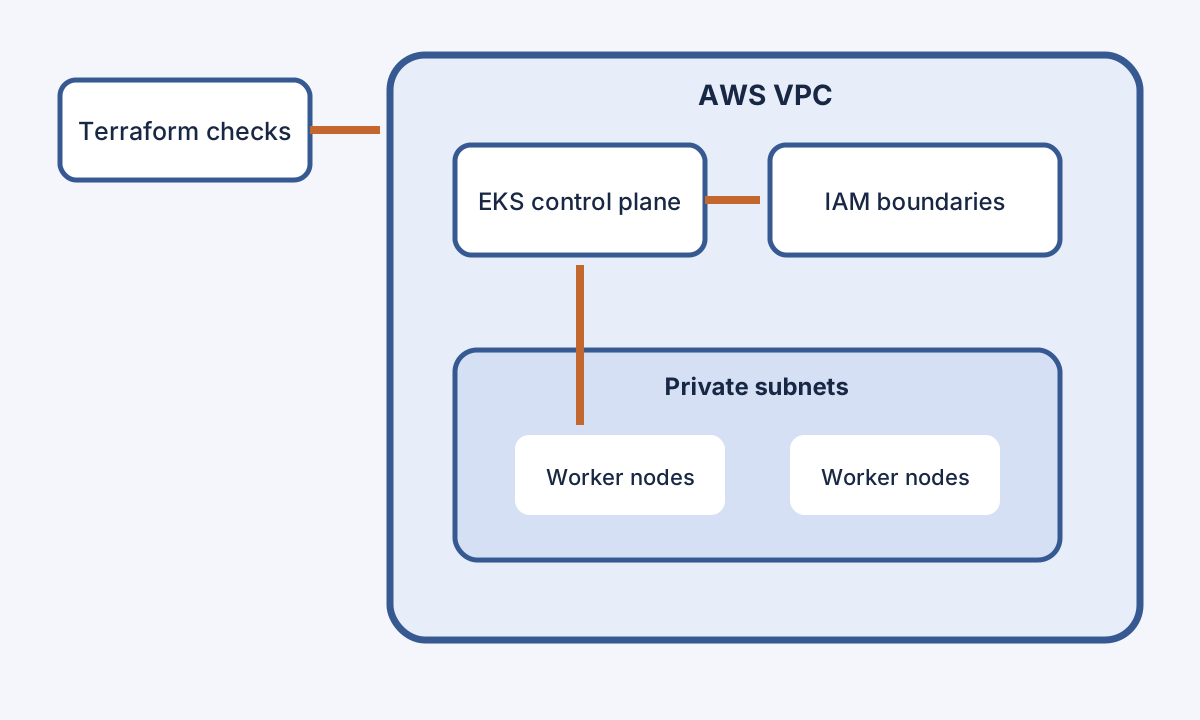
Terraform modules define the VPC and subnet boundaries, EKS control plane, private worker nodes, IAM roles, and security groups. Environment configuration composes those modules, while automated checks validate formatting and configuration before infrastructure changes proceed.
04
Implementation approach
The configuration separates networking, cluster, node, IAM, and security concerns into Terraform modules. Inputs expose environment-specific settings while automated formatting and validation checks catch configuration defects before deployment.
05
Operational decisions
- Reliability
- Declarative, modular configuration makes cluster infrastructure repeatable and changes reviewable through Terraform plans.
- Security
- Private worker nodes, scoped IAM roles, and explicit security-group boundaries reduce unnecessary exposure and make access paths auditable.
- Cost
- Capacity remains configurable so environments can choose worker-node sizing without forking the shared infrastructure modules.
06
Outcomes and current maturity
Current maturity: production
- Produced a reusable Terraform structure for EKS, networking, IAM, and security controls.
- Kept worker nodes private while preserving controlled cluster connectivity.
- Automated infrastructure formatting and validation checks.
Current limitations
- Workload deployment and application-level observability are outside this infrastructure case study.
- No cost savings, uptime improvement, or production scale figures are claimed.
- Environment-specific disaster recovery remains an operational responsibility.
Roadmap
- Extend policy checks for infrastructure security and compliance.
- Add documented upgrade and recovery exercises for cluster operators.
- Publish verified environment benchmarks after review.
07
Lessons learned
- Network and identity boundaries are easier to review when expressed as distinct modules.
- Private worker nodes should be an architectural default, not a late hardening step.
- Automated checks provide value before any cloud resources are changed.
08